Autonomic Nervous System Chart
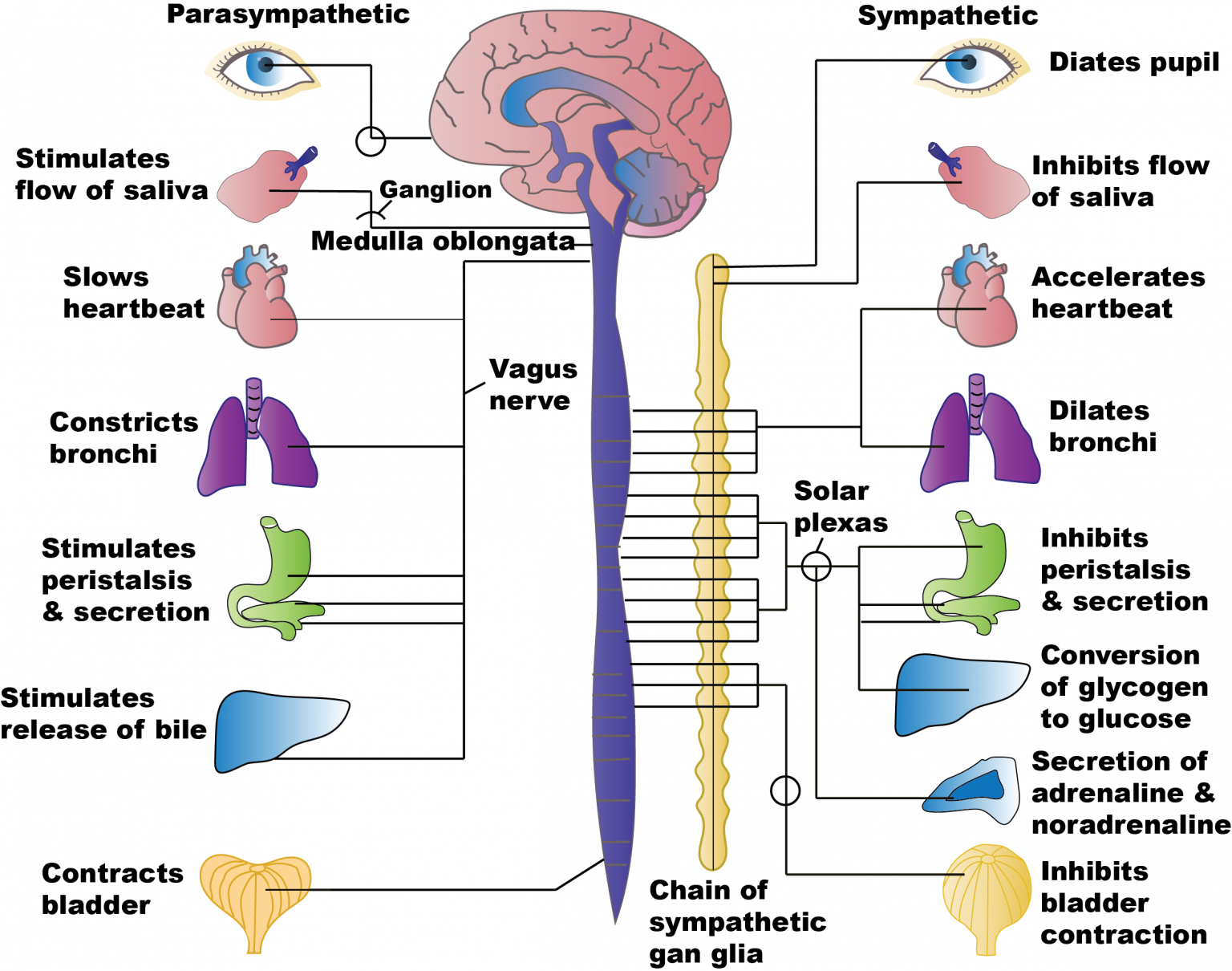
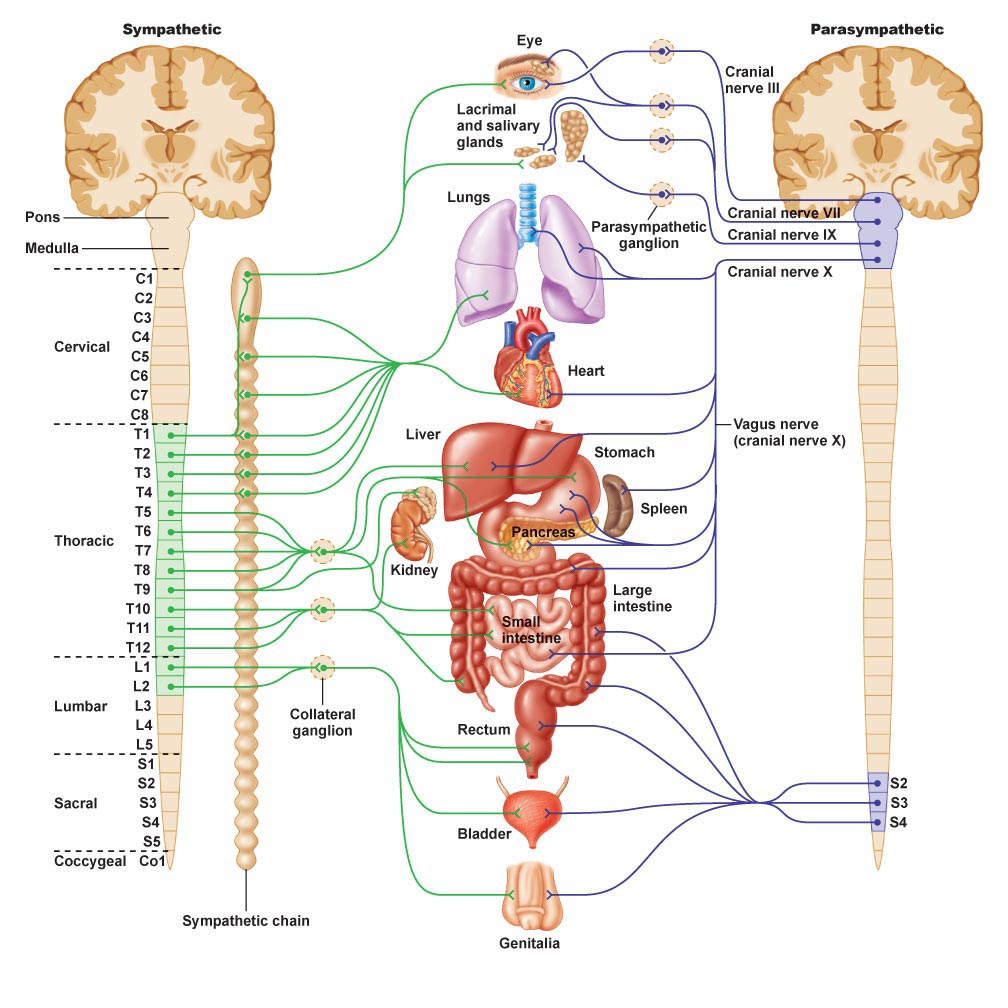
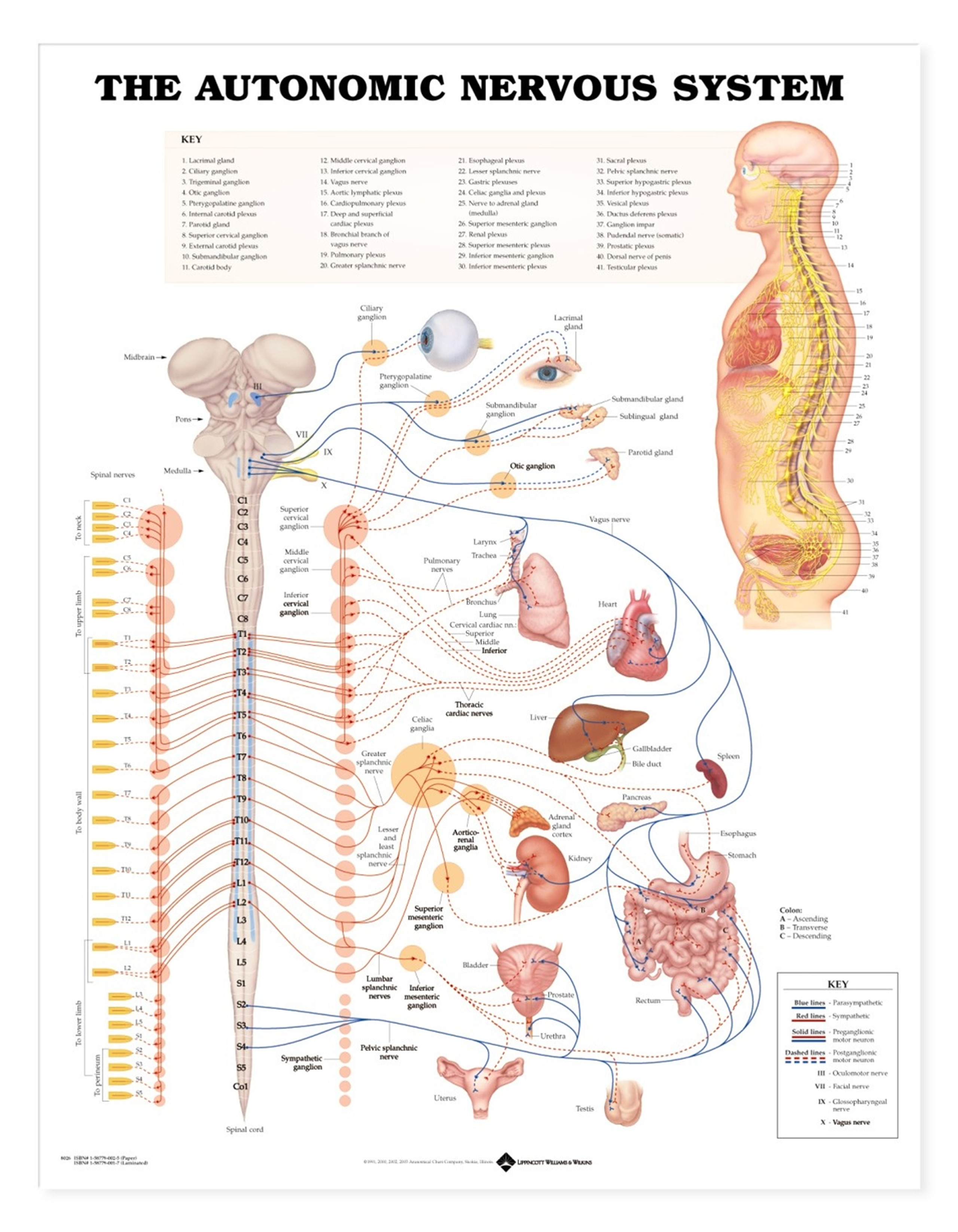
Autonomic Nervous System Chart - Web the autonomic system is the part of the peripheral nervous system that regulates involuntary body functions, including digestion and heartbeat. Afferent neurons, efferent neurons, and interneurons. It innervates smooth muscle as well as glands and is further divided into the. The autonomic nervous system operates by receiving information from the environment and from other parts of the body. Web your autonomic nervous system includes a network of nerves that extend throughout your head and body. Web the somatic involves parts of the body a person can command at will, and the autonomic helps run involuntary functions such as pumping blood. Name the components of a visceral reflex specific to the autonomic division to which it belongs. Printed in the usa by anatomical chart company. Web the autonomic nervous system is a control system that acts largely unconsciously and regulates bodily functions, such as the heart rate, its force of contraction, digestion, respiratory rate, pupillary response, urination, and sexual arousal. Web the nervous system can be divided into two functional parts: The autonomic nervous system operates by receiving information from the environment and from other parts of the body. The somatic nervous system and the autonomic nervous system. The sympathetic system is viewed as a quickly responding system that mobilizes the body for action where the parasympathetic system is believed to act much more slowly to dampen responses [3]. Web there are 3 basic classes of neurons: Some of those nerves extend directly out from your brain, while others extend out from your spinal cord, which. Also known as sensory neurons, afferent neurons transmit sensory signals to the central nervous system from. The somatic nervous system causes contraction of skeletal muscles. The autonomic nervous system (ans) is part of the. Name the components of a visceral reflex specific to the autonomic division to which it belongs. Afferent neurons, efferent neurons, and interneurons. Web the autonomic nervous system (ans) is a component of the peripheral nervous system that uses both afferent (sensory) and efferent (effector) neurons, which control the functioning of the internal organs and involuntary processes via. The sympathetic and parasympathetic systems. Web this classic chart of the autonomic nervous system shows the pathways of both the parasympathetic and the sympathetic systems.. Some of those nerves extend directly out from your brain, while others extend out from your spinal cord, which. Web there are 3 basic classes of neurons: Web the autonomic nervous system (ans) is a branch of the peripheral nervous system (pns) that regulates the function of the viscera. Web the somatic involves parts of the body a person can. Web the nervous system can be divided into two functional parts: Web the autonomic nervous system (ans) is a branch of the peripheral nervous system (pns) that regulates the function of the viscera. In short, it keeps you alive. Web the autonomic system is the part of the peripheral nervous system that regulates involuntary body functions, including digestion and heartbeat.. Web the autonomic nervous system receives input from parts of the central nervous system (cns) that process and integrate stimuli from the body and external environment. Web the autonomic nervous system (ans) is a functional division of the nervous system, with its structural parts in both the central nervous system (cns) and the peripheral nervous system (pns). It consists of. Web the autonomic nervous system (ans) is responsible for involuntary control of the body, usually for the sake of homeostasis (regulation of the internal environment). Clearly labeled lines lead from the spinal nerve to the ganglia and the corresponding organ. Web the autonomic nervous system anatomical chart shows the autonomic nervous system, including sympathetic and parasympathetic nerves. It controls the. The sympathetic system is viewed as a quickly responding system that mobilizes the body for action where the parasympathetic system is believed to act much more slowly to dampen responses [3]. Body functions in different organ systems (e.g., the cardiovascular, gastrointestinal, genitourinary systems). Web your autonomic nervous system is the aspect of the nervous system that controls all of your. Differentiate between the structures of the sympathetic and parasympathetic divisions in the autonomic nervous system. Web your autonomic nervous system includes a network of nerves that extend throughout your head and body. The somatic nervous system and the autonomic nervous system. The spinal cord, spinal nerves and the organs affected are illustrated. It contains three anatomically distinct divisions: Web the autonomic nervous system (ans) is a branch of the peripheral nervous system (pns) that regulates the function of the viscera. Web the autonomic nervous system anatomical chart shows the autonomic nervous system, including sympathetic and parasympathetic nerves. In short, it keeps you alive. Afferent neurons, efferent neurons, and interneurons. Web this classic chart of the autonomic nervous system. It controls the glands and smooth muscle of all the internal organs (viscera) unconsciously. Web the autonomic nervous system, a part of our overall nervous system, regulates smooth muscle cells, cardiac muscle, and gland cells autonomously. The sympathetic nervous system for fight or flight responses, and the parasympathetic nervous system for rest and digestion. Web the autonomic nervous system is. It controls the glands and smooth muscle of all the internal organs (viscera) unconsciously. Some of those nerves extend directly out from your brain, while others extend out from your spinal cord, which. Name the components of a visceral reflex specific to the autonomic division to which it belongs. Web the autonomic nervous system (ans) is a nervous system component. The somatic nervous system causes contraction of skeletal muscles. It controls the glands and smooth muscle of all the internal organs (viscera) unconsciously. Web the autonomic nervous system (ans) is a functional division of the nervous system, with its structural parts in both the central nervous system (cns) and the peripheral nervous system (pns). Clearly labeled lines lead from the spinal nerve to the ganglia and the corresponding organ. Information conveyed through the nervous system. Web the autonomic nervous system is a component of the peripheral nervous system that regulates involuntary physiologic processes including heart rate, blood pressure, respiration, digestion, and sexual arousal. This means that anytime our brain tells the ans to do something, that signal always travels through two neurons to get to its site of action. Web your autonomic nervous system is the aspect of the nervous system that controls all of your vital functions, like breathing, digestion, and heart rate—many of which you aren't consciously aware of. It is divided into the. The major differences between the two systems are evident in the responses that each produces. Afferent neurons, efferent neurons, and interneurons. Web the somatic involves parts of the body a person can command at will, and the autonomic helps run involuntary functions such as pumping blood. The sympathetic system is viewed as a quickly responding system that mobilizes the body for action where the parasympathetic system is believed to act much more slowly to dampen responses [3]. Also known as sensory neurons, afferent neurons transmit sensory signals to the central nervous system from. Differentiate between the structures of the sympathetic and parasympathetic divisions in the autonomic nervous system. This anatomy chart is great for hanging in doctor's offices, schools, or for studying at home.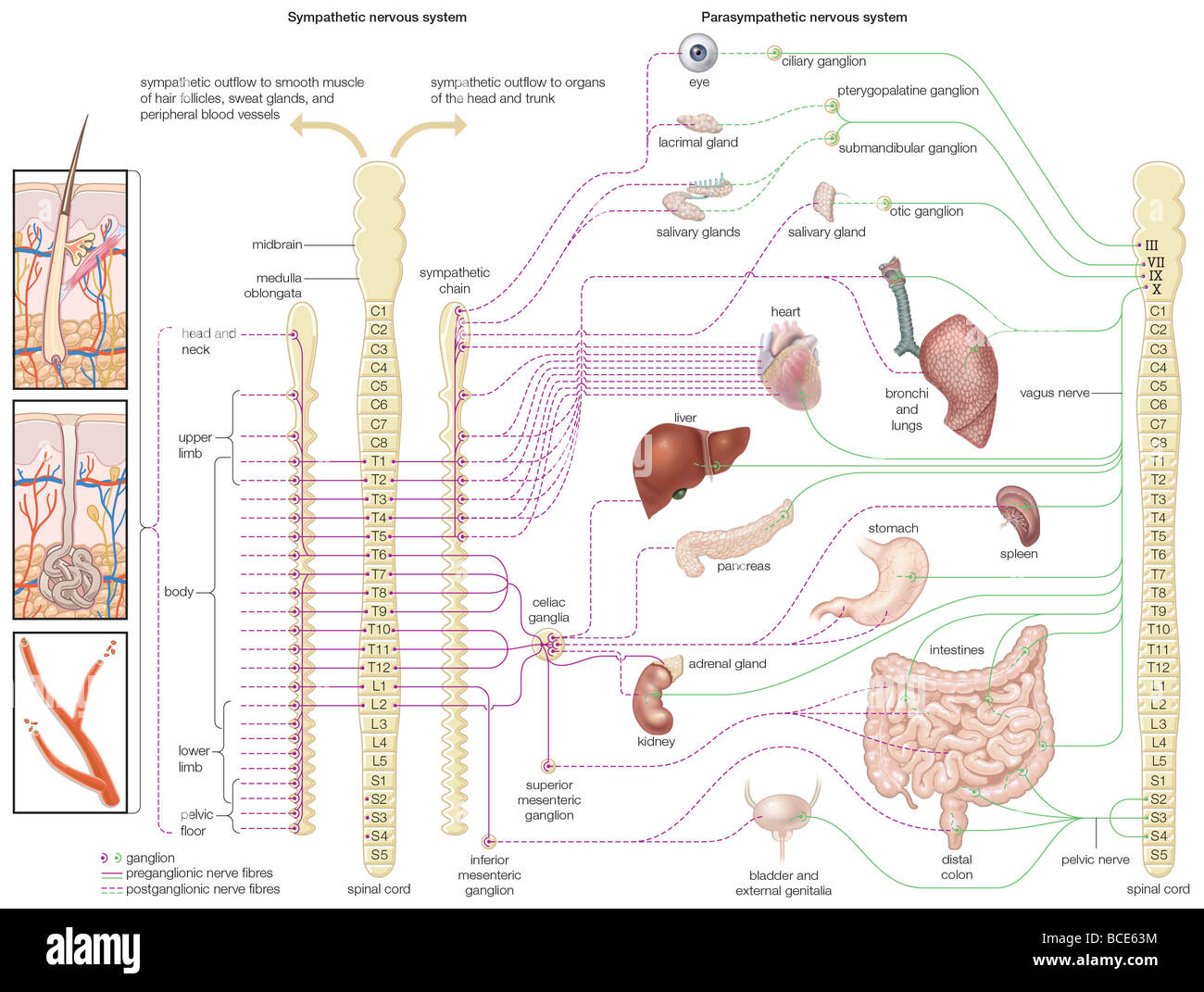
Diagram of the autonomic nervous system, showing distribution of Stock

Autonomic Nervous System Poster Clinical Charts and Supplies
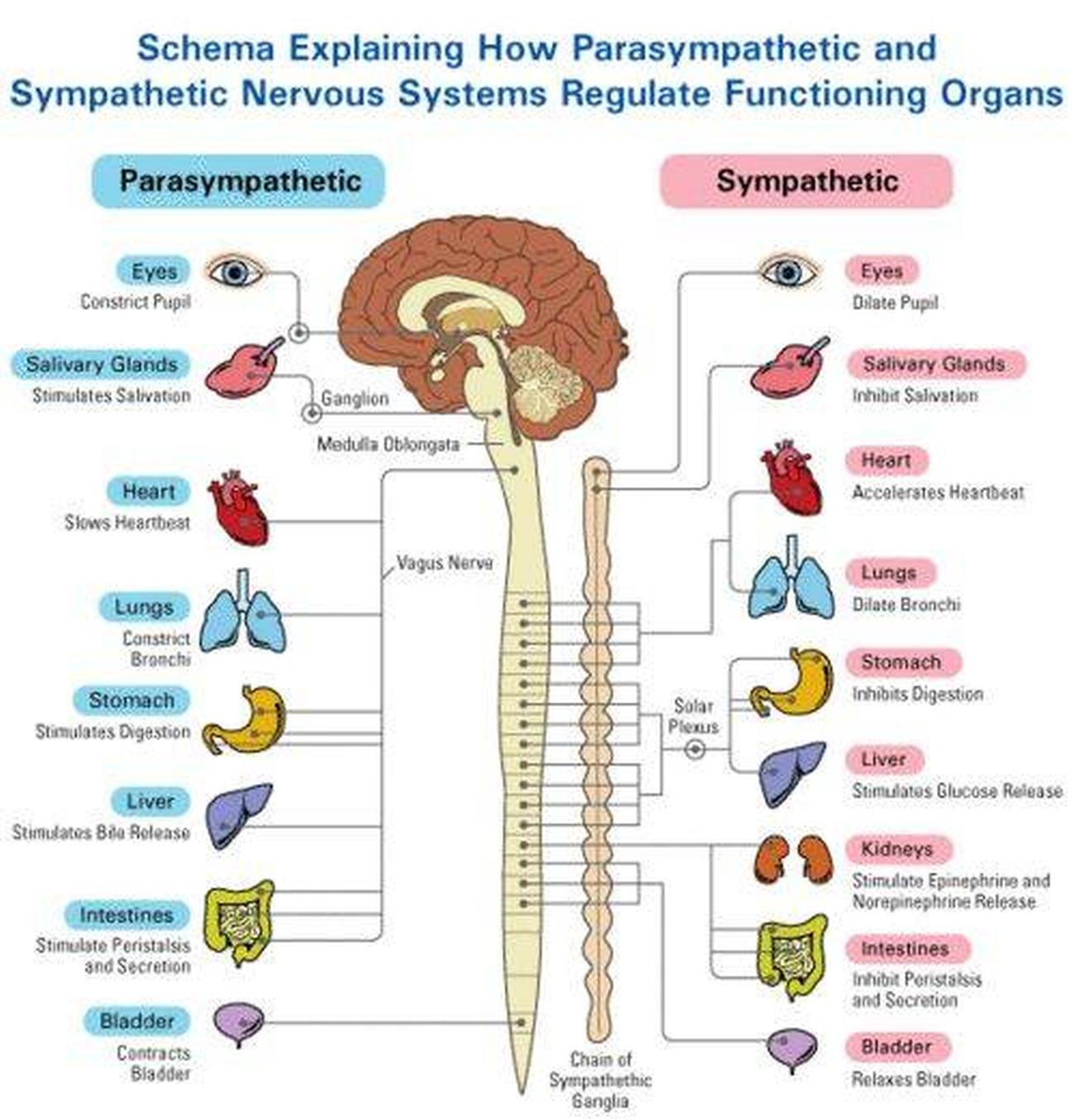
Pictures Of Autonomic Nervous SystemHealthiack
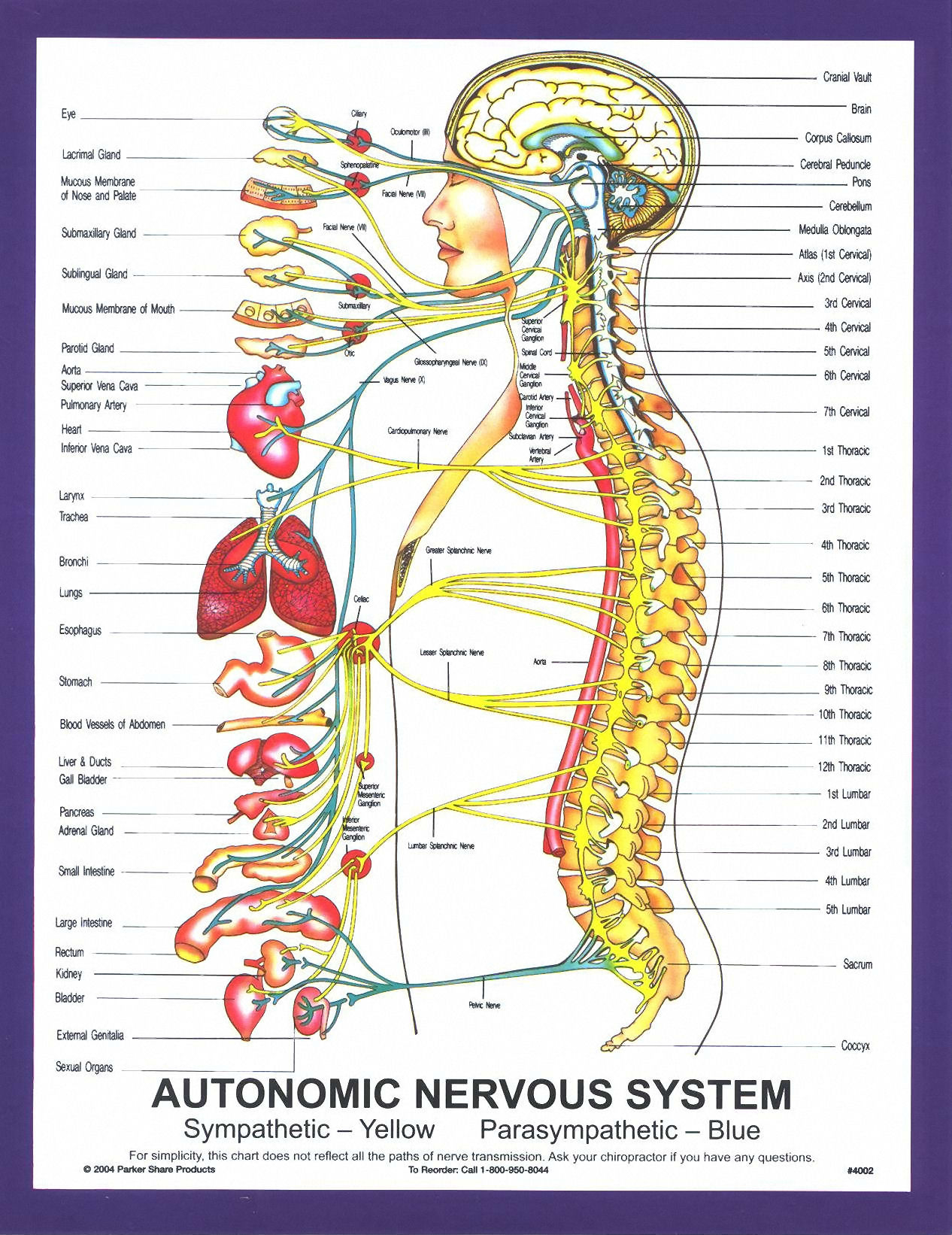
chart_autonomic_nervous_system_large John G. Murray Jr. Chiropractic
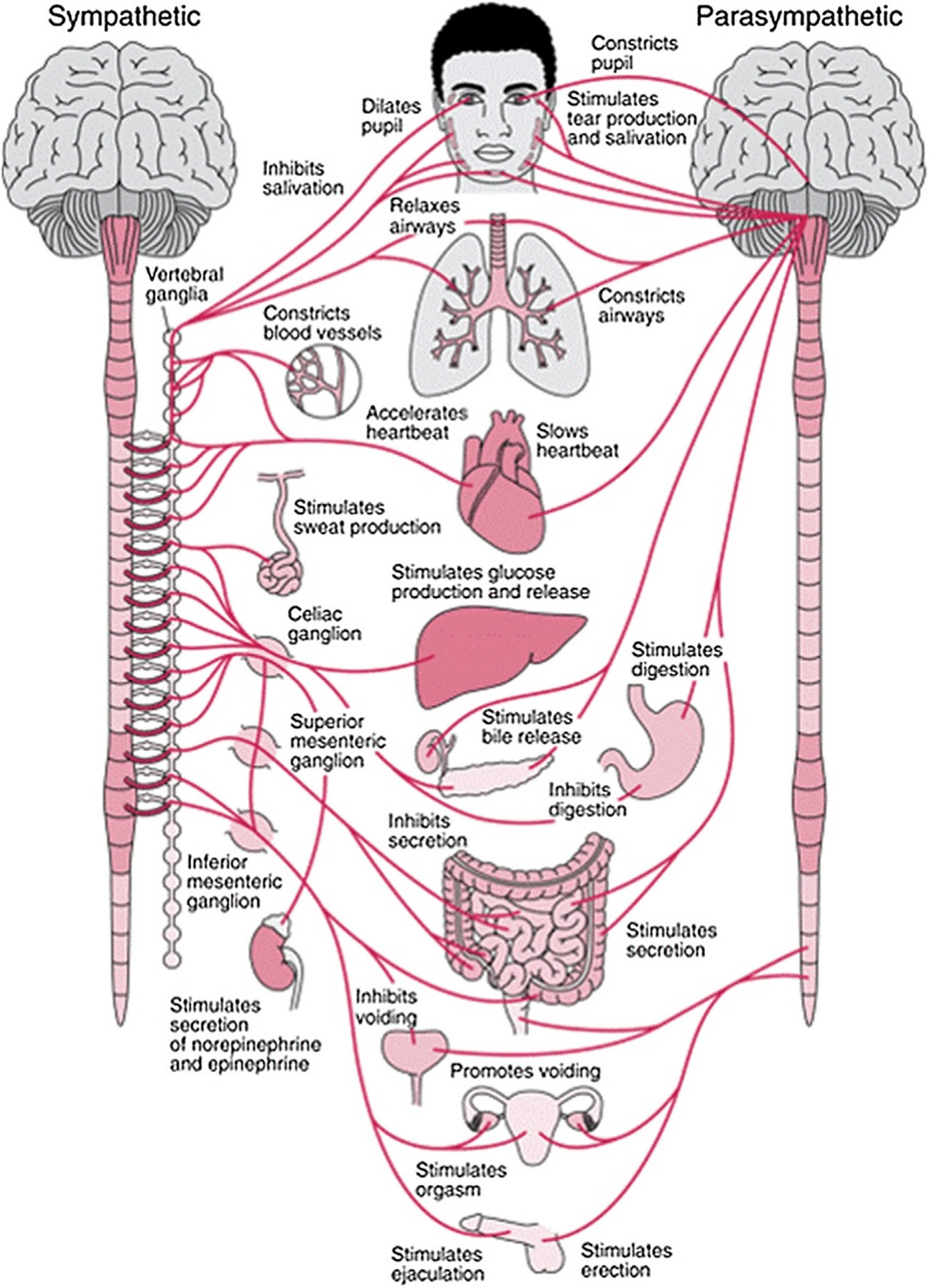
Autonomic nervous system disorders causes, symptoms, diagnosis

Autonomic Nervous Systems' Relationship to Emotional Health Emotional
4.2 Autonomic Nervous System Basics Nursing Pharmacology
Autonomic Nervous System Biological Science Picture Directory
Autonomic Nervous System Chart Autonomic Nerves Poster 9781587790010

Autonomic nervous system human anatomy
It Consists Of Two Subsystems:
Sensory Input For Autonomic Functions Can Be From Sensory Structures Tuned To External Or Internal Environmental Stimuli.
Web The Autonomic System Is The Part Of The Peripheral Nervous System That Regulates Involuntary Body Functions, Including Digestion And Heartbeat.
The Autonomic Nervous System Operates By Receiving Information From The Environment And From Other Parts Of The Body.
Related Post: