Ear Gauge Chart Actual Size
Ear Gauge Chart Actual Size - Gauge sizes are a little counterintuitive at first, because they’re literally backwards: Web this chart also provides the conversions between gauges, millimeters, and inches, so you can check between measurement types to be sure you are getting the right size/gauge of plug. Web knowing the most common size of ear gauges can help you choose which one you want to get as well as what to expect when getting one. This table will help you visualize the conversion between gauge sizes, millimeters, and inches. Web well, despite what most people think about piercings, there is a standard gauge size that the professional piercers stick to, and these correspond to the standard sizes for the earring posts, which is why you need to. Calibrated image in cad so hopefully the. Web ear gauge size chart. Web for nipple or navel piercings, 14 g through 12 g is the most common. Web at smaller sizes, an earring size chart for gauges can provide a visual understanding of these sizes, detailing both gauge numbers and their equivalent sizes in millimeters (mm). Most people refer to smaller size ears in gauge. Web at smaller sizes, an earring size chart for gauges can provide a visual understanding of these sizes, detailing both gauge numbers and their equivalent sizes in millimeters (mm). You will see some jewelry displayed by their gauge size and some by their mm size. Web the most common gauge sizes for ear piercings are 20g (0.8mm), 18g (1mm), and 16g (1.2mm). This process is far from new. Most people start with the thinner 20g post gauge especially for earlobe piercings. Web this earring/body jewelry gauge size chart specifies sizes for gauging your body piercings. How to measure ear gauge size. Typical sizing for your ears is measured in either ear gauge, millimeters, and/or inches. Gauge sizes go up in even numbers from there (16g, 14g, 12g, 10g, etc.). The smaller the number, the larger the size. Easily convert gauges to millimetres and ensure the ideal size for your piercings. Typical sizing for your ears is measured in either ear gauge, millimeters, and/or inches. Whether you're a newbie to ear stretching or an experienced enthusiast, our chart provides all the relevant information you need. This progression outlines the standard measurements from smallest to larger sizes. It illustrates. Web here is our shortened ear gauge size chart with conversions of many popular sizes. Any size larger than 00g would be referred to in millimeters or inches. Web here’s a breakdown to help you understand ear gauges and the sizing crucial for ear stretching. How big you want to go depends on your preferences, but most people go for. Standard ear piercings are usually pierced at 20g or 18g (approx. Web understanding the ear gauge size chart and the gauging process can empower you to make informed decisions and achieve your desired look safely. How big you want to go depends on your preferences, but most people go for somewhere between 14g and 18g. Most people refer to smaller. This process is far from new. Find below an ear gauging size chart. Web how do ear gauge sizes work? Web understanding the ear gauge size chart and the gauging process can empower you to make informed decisions and achieve your desired look safely. If you are just starting to stretch, the bottom of the chart has the smallest sizes. For larger gauges—like stretched ear lobes—the smallest gauge usually starts at size 8 and goes up from there. here is how gauges compare to diameters in inches and millimeters: Scroll down for the full conversion table. Once they reach above 00 gauge people size their ears in either millimeters or inches. Web on the morning of the shooting, crooks bought. How to measure ear gauge size. Web well, despite what most people think about piercings, there is a standard gauge size that the professional piercers stick to, and these correspond to the standard sizes for the earring posts, which is why you need to. This table will help you visualize the conversion between gauge sizes, millimeters, and inches. Web sizes. If you are just starting to stretch, the bottom of the chart has the smallest sizes. Web the most common gauge sizes for ear piercings are 20g (0.8mm), 18g (1mm), and 16g (1.2mm). Web knowing the most common size of ear gauges can help you choose which one you want to get as well as what to expect when getting. Gauge sizes go up in even numbers from there (16g, 14g, 12g, 10g, etc.). Web for nipple or navel piercings, 14 g through 12 g is the most common. How to measure ear gauge size. Web this earring/body jewelry gauge size chart specifies sizes for gauging your body piercings. Web ear gauges actual size. You will see some jewelry displayed by their gauge size and some by their mm size. Web knowing the most common size of ear gauges can help you choose which one you want to get as well as what to expect when getting one. Web the charts below show the various gauges and lengths in both inches and millimeters when. Web ear gauges come in various sizes, ranging from small gauges (around 20 gauge) to larger sizes like 00 gauge or even beyond. Most people refer to smaller size ears in gauge. Web here’s a breakdown to help you understand ear gauges and the sizing crucial for ear stretching. Standard ear piercings are usually pierced at 20g or 18g (approx.. Most people start with the thinner 20g post gauge especially for earlobe piercings. Web the most common gauge sizes for ear piercings are 20g (0.8mm), 18g (1mm), and 16g (1.2mm). You will see some jewelry displayed by their gauge size and some by their mm size. To measure your current ear gauge size, you can use a caliper or ruler specifically designed for measuring jewelry. Web here is our shortened ear gauge size chart with conversions of many popular sizes. Below is a sizing chart to help size your jewelry. The following table illustrates the most common gauge sizes and their corresponding diameters in both millimeters (mm) and inches (in): For larger gauges—like stretched ear lobes—the smallest gauge usually starts at size 8 and goes up from there. here is how gauges compare to diameters in inches and millimeters: Once they reach above 00 gauge people size their ears in either millimeters or inches. Web the charts below show the various gauges and lengths in both inches and millimeters when you’re choosing the right jewelry thickness, length, accessory or ball size, or if you’re looking to stretch up to the next size. Web this earring/body jewelry gauge size chart specifies sizes for gauging your body piercings. Web how do ear gauge sizes work? How big you want to go depends on your preferences, but most people go for somewhere between 14g and 18g. How to measure ear gauge size. Web this chart also provides the conversions between gauges, millimeters, and inches, so you can check between measurement types to be sure you are getting the right size/gauge of plug. Standard ear piercings are usually pierced at 20g or 18g (approx.
The History, Method, and Warnings of Ear Gauging
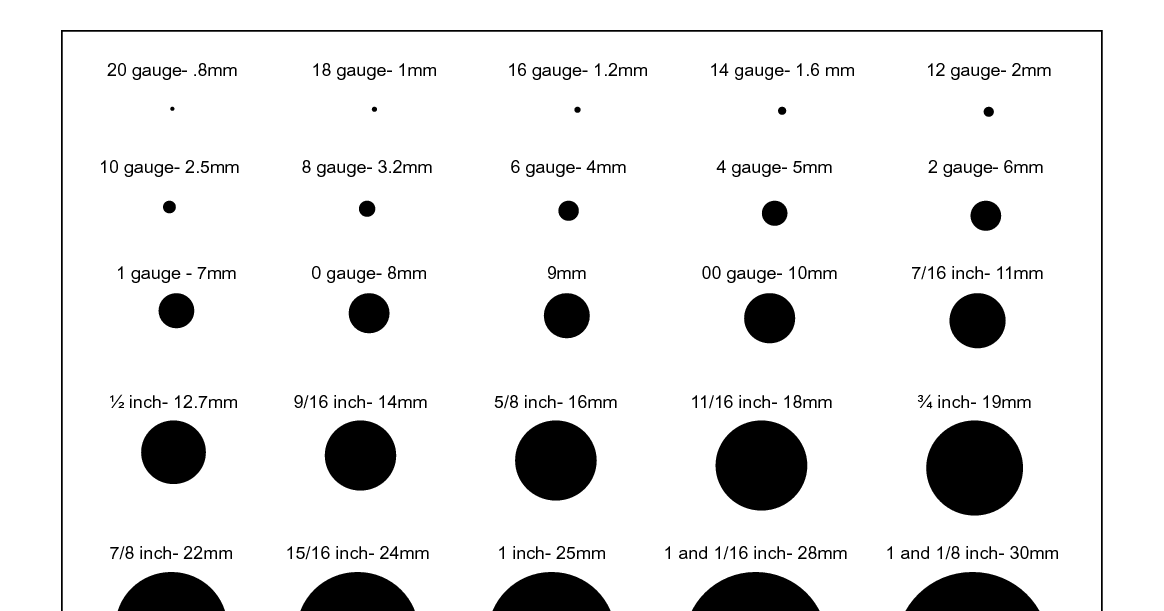
Ear Gauge Size Chart Actual

Gauge Size Chart Actual Size

Earring Gauge Size Chart Mm
:max_bytes(150000):strip_icc()/ear-gauge-chart-56a553f15f9b58b7d0dc38e2.png)
Earring Size Chart Gauge

Ear Gauge Chart Actual Size

Ear Gauge Chart Actual Size

Tabella di formato Taylor Crystal Gauges size chart, Ear gauge

Ear Plug Sizes Chart Gauge Actual Size

Printable Gauge Chart wikiHow
Any Size Larger Than 00G Would Be Referred To In Millimeters Or Inches.
Web Find The Perfect Fit For Your Stretched Ears With Our Comprehensive Size Chart.
Find Below An Ear Gauging Size Chart.
Gauge Sizes Are A Little Counterintuitive At First, Because They’re Literally Backwards:
Related Post: