Pyrometric Cone Chart
Pyrometric Cone Chart - Web this comprehensive chart shows the temperatures of orton pyrometric cones in degrees f. Cones are made from recipes of ceramic materials and minerals tuned to make them bend gradually through a target temperature range. Melted large orton pyrometric cones 5, 6 and 7. Web four seger cones after use. It is based on the use of pyrometric cones to measure heatwork in a kiln firing. Web all of our resources for orton's pyrometric cones. Once the appropriate cones are selected, excellent, reproducible results can be expected. Web pyrometric cones are slender pyramids made from about 100 carefully controlled compositions. Behavior of pyrometric cones pyrometric cones deform due to the formation of glass and the Web this pyrometric cone chart provides the temperature equivalents for orton cones based on specific heating rates. Web pyrometric kiln cones measure heat absorption as kiln temperatures reach heating ranges. Web differences between a cone touching the shelf and a cone at the 4 o’clock position are small, usually 1 or 2 degrees. Pyrometric cones are pyrometric devices that are used to gauge heatwork during the firing of ceramic materials in a kiln. The cones, often used in sets of three, are positioned in a kiln with the wares to be fired and, because the individual cones in a set soften and fall over at different temperatures, they provide. Web these tables provide a guide for the selection of cones. Web the orton cone chart was developed by edward orton, jr. Web this pyrometric cone chart provides the temperature equivalents for orton cones based on specific heating rates. This deforming action allows us to either shut the kiln off at the proper point (as in the case of the mini bar and kiln sitter) or simply to record what happened during the firing (as in the case of the witness cone). (as determined at the national bureau of standards) large cones cone. To produce a properly fired result, the next cone higher in sequence is placed into the shutoff device and the result is confirmed by a cone placed inside the kiln on a kiln shelf. Prior to their development there was no scientific means for indicating when to stop a kiln firing for optimal maturation of a clay body or glaze. The actual bending temperature depends on firing conditions. Web pyrometric cones have been used to monitor ceramic firings for more than 100 years. Web pyrometric cones have been used to monitor ceramic firings for. Temperatures are shown for specific heating rates. The cones, often used in sets of three, are positioned in a kiln with the wares to be fired and, because the individual cones in a set soften and fall over at different temperatures, they provide. Once the appropriate cones are selected, excellent, reproducible results can be expected. Web this pyrometric cone chart. Refer to this cone temperature chart before firing. Web the orton cone chart was developed by edward orton, jr. Web this pyrometric cone chart provides the temperature equivalents for orton cones based on specific heating rates. Web pyrometric cones have been used to monitor ceramic firings for more than 100 years. Web pyrometric cones have been used to monitor ceramic. Different heating rates will change the equivalent temperature. Web here is a guide to the various colors of orton pyrometric cones and bars. These heating rates are for the last 100°c or 180°f of the firing. The cones, often used in sets of three, are positioned in a kiln with the wares to be fired and, because the individual cones. They are useful in determining when a firing is complete, if the kiln provided enough heat, if there was a temperature difference in the kiln or if a problem occured during the firing. Web four seger cones after use. Behavior of pyrometric cones pyrometric cones deform due to the formation of glass and the To produce a properly fired result,. Cone pack is pictured after being removed from the kiln. Web four seger cones after use. Generally speaking, the temperatures in the 108°f/hour column are used when discussing ceramics, porcelain and china. Web orton pyrometric cone chart in fahrenheit and celsius. These heating rates are for the last 100°c or 180°f of the firing. Web this pyrometric cone chart provides the temperature equivalents for orton cones based on specific heating rates. This guide provides useful information on cones and how firings can affect your pottery. Web pyrometric cones are slender pyramids made from about 100 carefully controlled compositions. Web all of our resources for orton's pyrometric cones. This gives a easy way to identify. This gives a easy way to identify your cones at a glance. Keep the chart near your kiln for quick reference. Web download and print the orton cone wall chart at sheffield pottery. Temperatures are shown for specific heating rates. Cones are made from recipes of ceramic materials and minerals tuned to make them bend gradually through a target temperature. It is based on the use of pyrometric cones to measure heatwork in a kiln firing. As discussed above, the equivalent cone temperature depends upon how fast one gets to it. Refer to this cone temperature chart before firing. The actual bending temperature depends on firing conditions. The cones, often used in sets of three, are positioned in a kiln. Web pyrometric cones have been used to monitor ceramic firings for more than 100 years. Web here is a guide to the various colors of orton pyrometric cones and bars. As discussed above, the equivalent cone temperature depends upon how fast one gets to it. Please note that the cone chart gives 3 different temperatures for each cone number. Web. Web utilize the orton cone temperature equivalents chart to select the correct cone numbers you will need. Heating rate in °c/hr 60°c/hr. Temperatures are shown for specific heating rates. Web there are 4 styles of pyrometric cone: Web four seger cones after use. Melted large orton pyrometric cones 5, 6 and 7. Web orton pyrometric cone chart in fahrenheit and celsius. Web pyrometric cones are slender pyramids made from about 100 carefully controlled compositions. Pyrometric cones are pyrometric devices that are used to gauge heatwork during the firing of ceramic materials in a kiln. Cones are made from recipes of ceramic materials and minerals tuned to make them bend gradually through a target temperature range. The actual bending temperature depends on firing conditions. Web pyrometric cones have been used to monitor ceramic firings for more than 100 years. The cones, often used in sets of three, are positioned in a kiln with the wares to be fired and, because the individual cones in a set soften and fall over at different temperatures, they provide. Web the orton cone chart was developed by edward orton, jr. These heating rates are for the last 100°c or 180°f of the firing. Temperatures shown on the charts were determined under controlled firing conditions in electric kilns and an air atmosphere.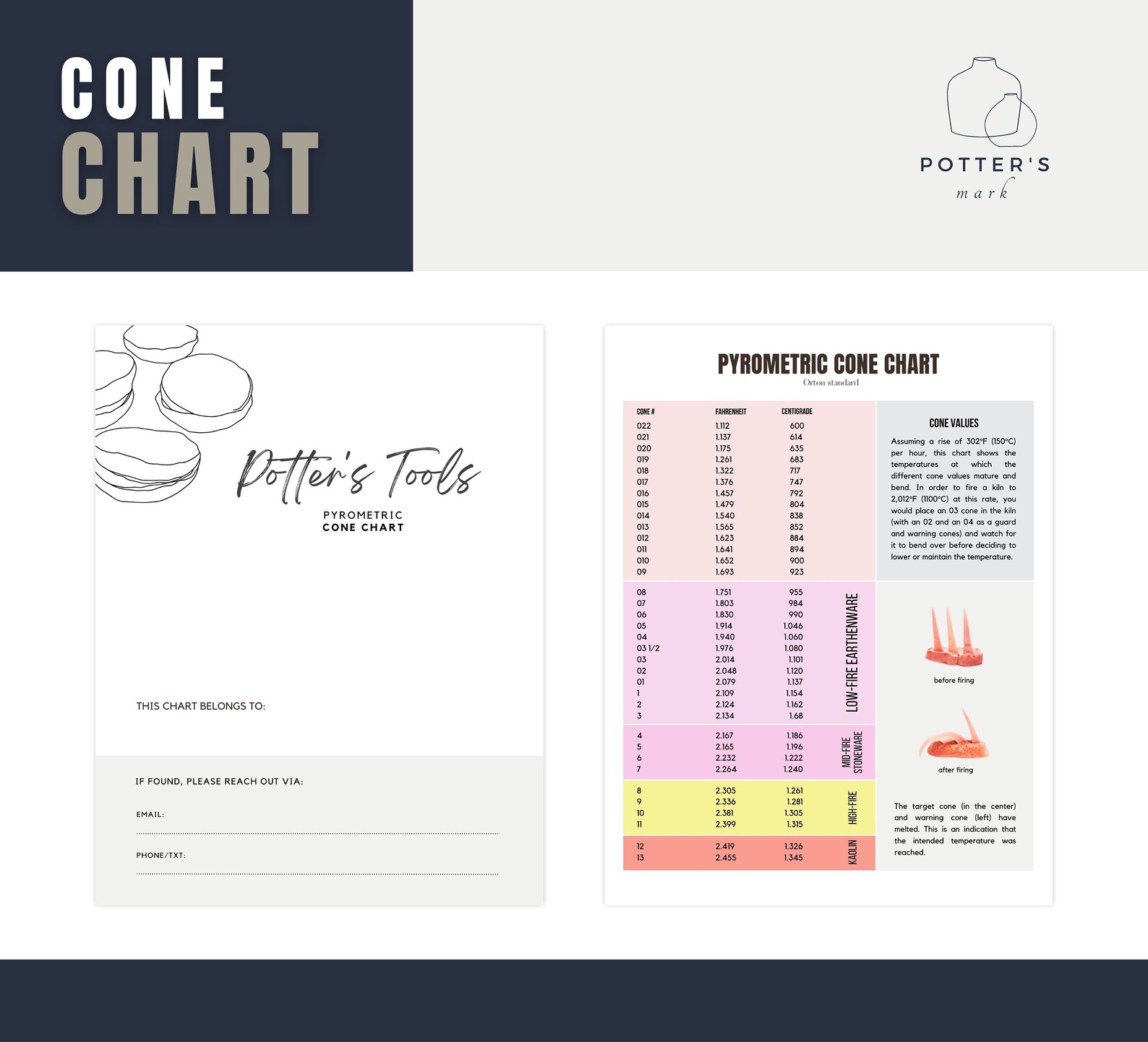
Potter's Pyrometric Cone Chart Digital PDF Printathome Etsy
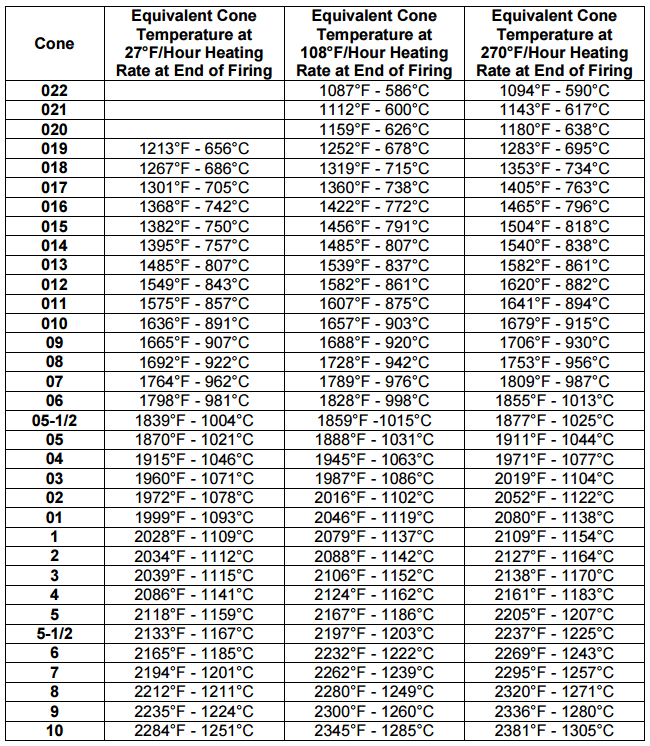
What is a Cone? A Guide to Pyrometric Cones and Kilns Soul Ceramics

Pyrometric Cone Chart xiymachine
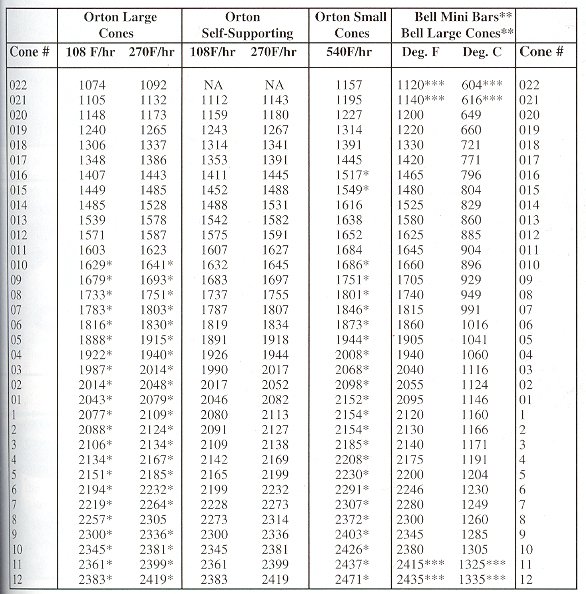
Cone Firing Chart A Visual Reference of Charts Chart Master

Pyrometric Cone Chart xiymachine
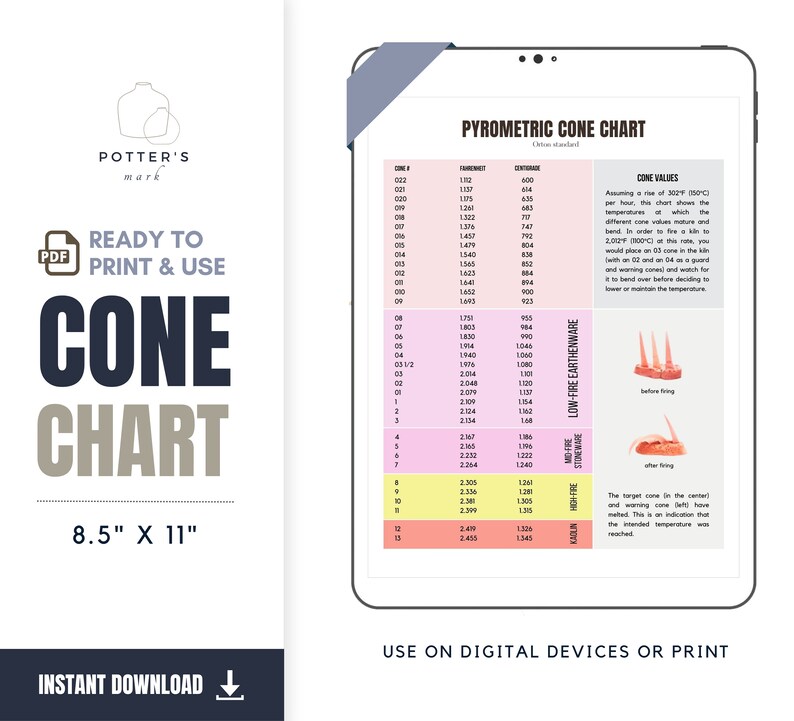
Potter's Pyrometric Cone Chart Digital PDF Printathome Etsy
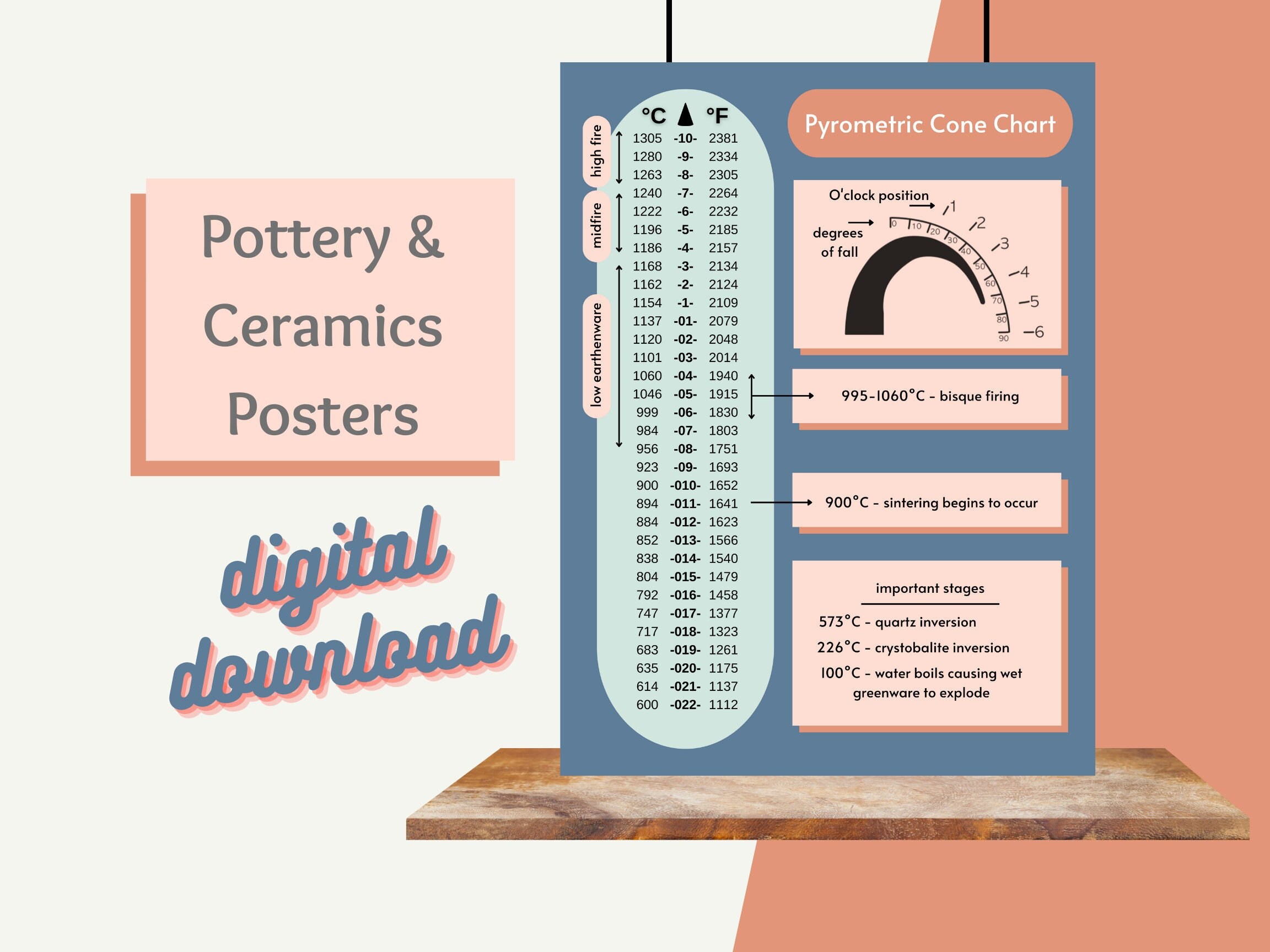
Potter's Pyrometric Cone Chart 18x24 POSTER Digital Printathome Tool
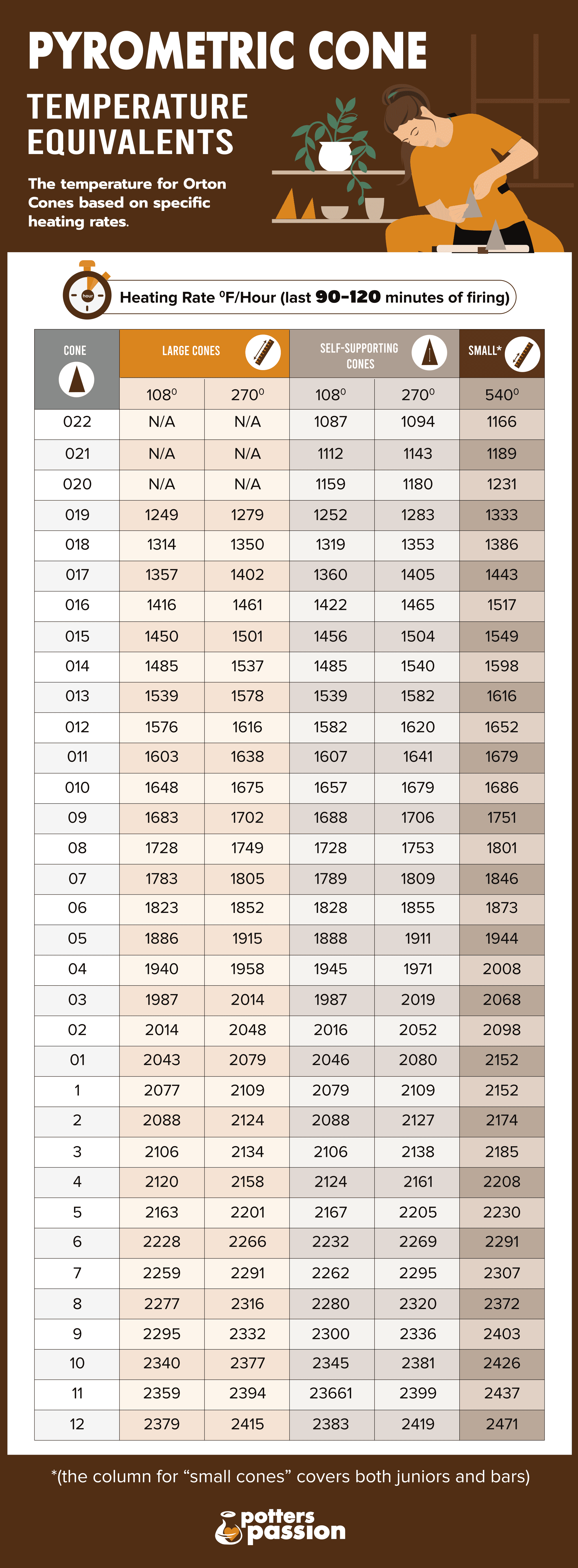
Pyrometric Cone Chart for Kiln Firing

Pyrometric Cone Temperature Conversion Chart Pottery
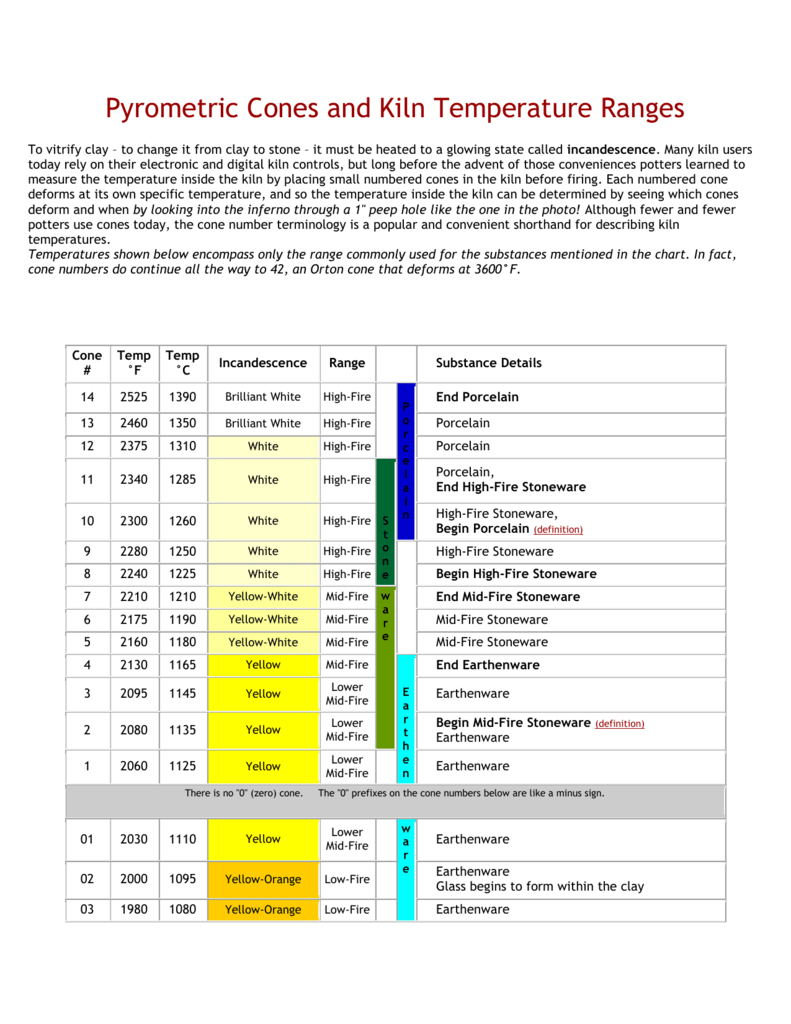
Pyrometric Cones and Kiln Temperature Ranges To vitrify clay to
Web Pyrometric Cones Are Designed To Deform At Certain Moments During A Firing.
Web Temperatures Shown On The Charts Were Determined Under Controlled Firing Conditions In Electric Kilns And An Air Atmosphere.
Please Note That The Cone Chart Gives 3 Different Temperatures For Each Cone Number.
This Deforming Action Allows Us To Either Shut The Kiln Off At The Proper Point (As In The Case Of The Mini Bar And Kiln Sitter) Or Simply To Record What Happened During The Firing (As In The Case Of The Witness Cone).
Related Post: